On this page · 5 sections
In short
Anchor the day to one predictable wake-up time, then fit naps and bedtime to your baby's age: newborns sleep in short stretches of 1 to 2 hours, and from around 4 months, when regular sleep cycles appear, a short, repeated bedtime routine helps your baby settle.
Why this matters
Build a realistic baby sleep routine by age with nap windows, bedtime consistency and wake-up anchors.
 Raffy · free on Android
Track it all in Raffy
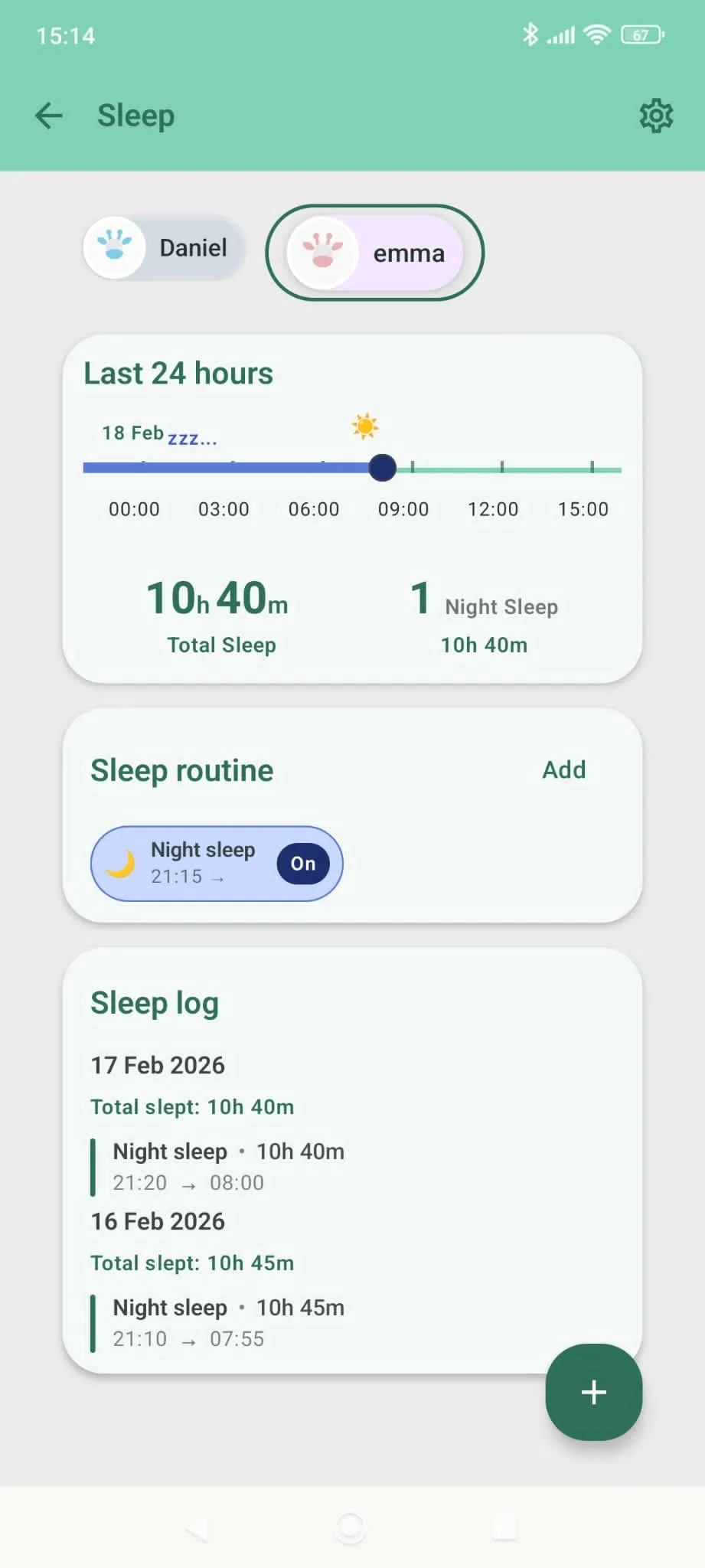
Sleep, feeding, growth and routines in one free Android app.
How to start this week
- Choose one stable morning wake-up anchor.
- Adjust nap count based on sleepy cues and age windows.
- Protect bedtime with a repeated 20-minute wind-down sequence.
Common mistakes to avoid
- Changing wake-up and bedtime every day.
- Adding too much stimulation in the final hour before sleep.
- Expecting immediate results before 7 to 10 consistent days.
When to talk with your pediatrician
Pediatric safety
- Symptoms become intense or persist for several days.
- Feeding, hydration, sleep, or mood change abruptly.
- You feel unsure and need a personalized care plan.
Progress is rarely linear. Small consistent steps are usually more useful than perfect plans.
Sources
- American Academy of Pediatrics · HealthyChildren.orgGetting Your Baby to Sleep
- NHS (UK)Helping your baby to sleep
- World Health OrganizationGuidelines on physical activity, sedentary behaviour and sleep for children under 5 years of age
We checked this article against these sources on Oct 26, 2026. It is educational, not medical advice. Editorial policy
