
9-Month-Old Baby Weekly Menu: Complete 7-Day Meal Plan
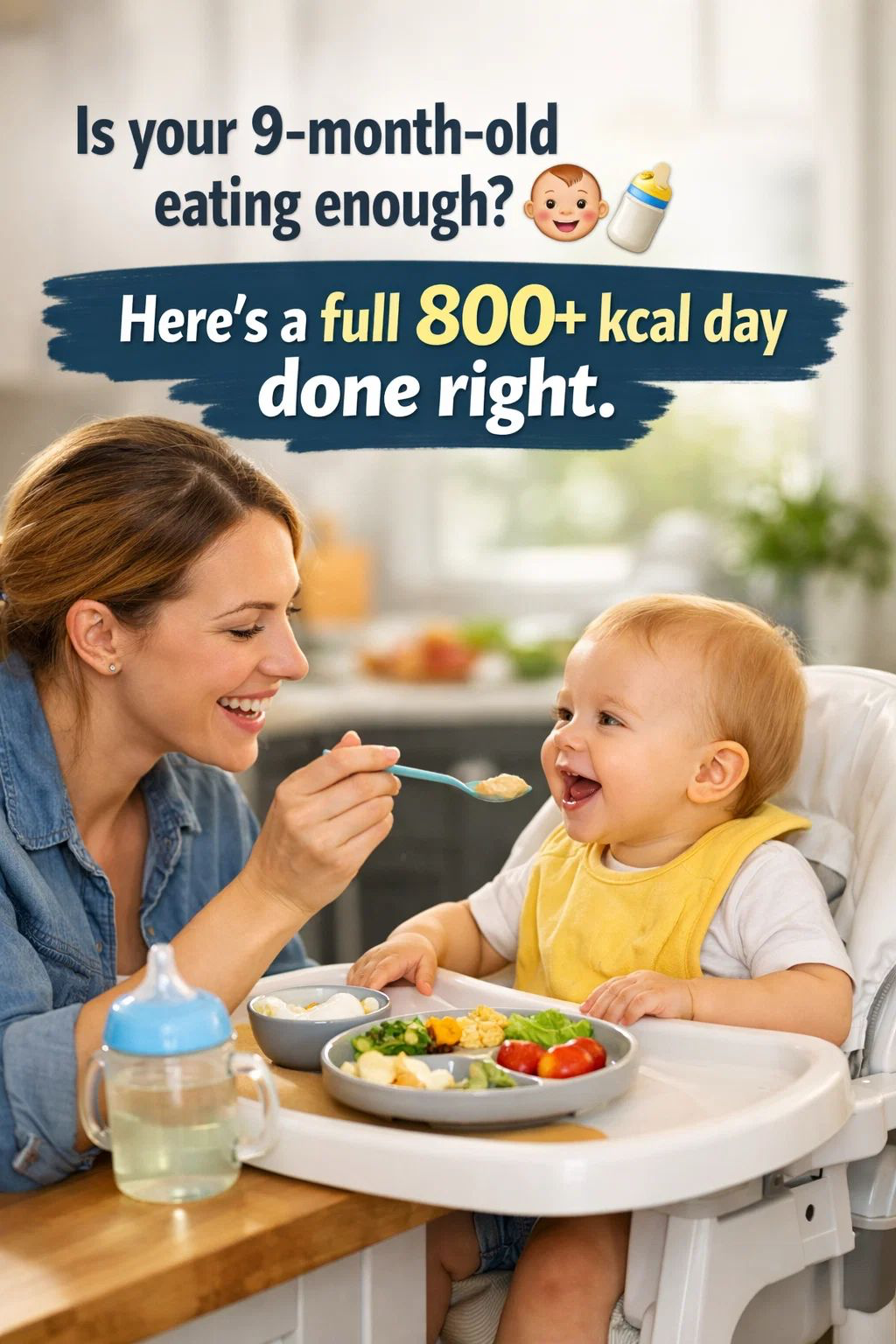
This 9-month-old baby weekly menu gives you a complete, practical 7-day structure with breakfast, snacks, lunch and dinner.
This guide is educational and based on general pediatric references (WHO, AEP, ESPGHAN). Every baby is different, so adjust portions and textures with your pediatric team.
Nutritional foundations at 9 months
- Estimated daily energy: around 700-900 kcal/day (depending on weight, appetite, and milk intake).
- Approximate macro distribution: carbs 45-55%, fats 35-40%, protein 10-15% (about 1.2 g/kg/day).
- Breast milk or formula remains essential, often around 400-500 ml/day.
- Textures can be thick purees, mashed foods, or adapted BLW depending on development.
Daily meal details
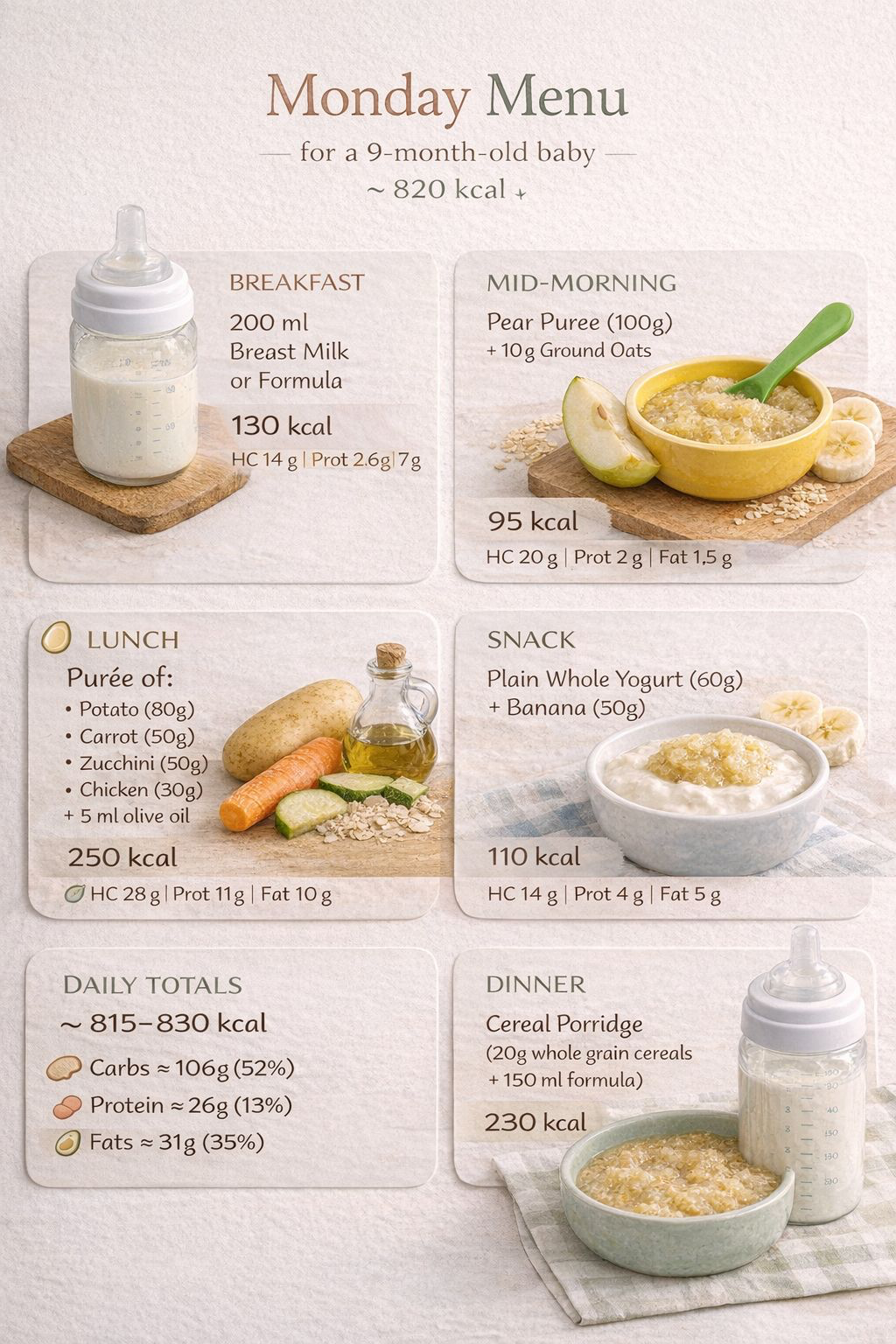
Monday (~820 kcal)
- Breakfast: 200 ml breast milk or formula.
- Morning snack: pear puree (100 g) + 10 g ground oats.
- Lunch: potato, carrot, zucchini, chicken (30 g), and 5 ml extra virgin olive oil.
- Snack: plain whole yogurt + banana.
- Dinner: whole-grain cereal porridge with formula.
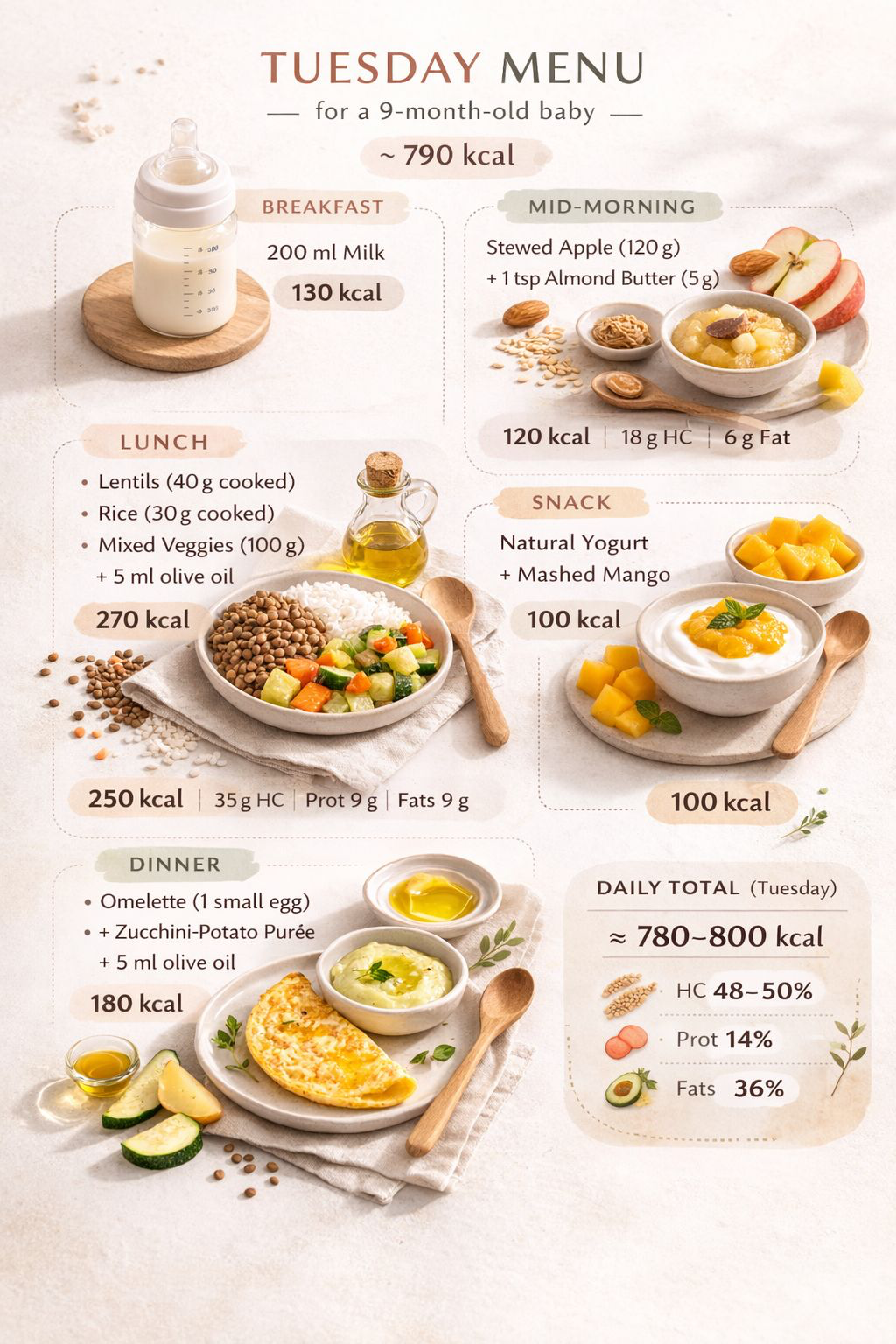
Tuesday (~790 kcal)
- Breakfast: 200 ml milk.
- Morning snack: cooked apple + 1 tsp almond butter (100% nuts).
- Lunch: lentils + rice + mixed vegetables + olive oil.
- Snack: plain yogurt + mango puree.
- Dinner: small egg omelet + zucchini/potato puree + olive oil.
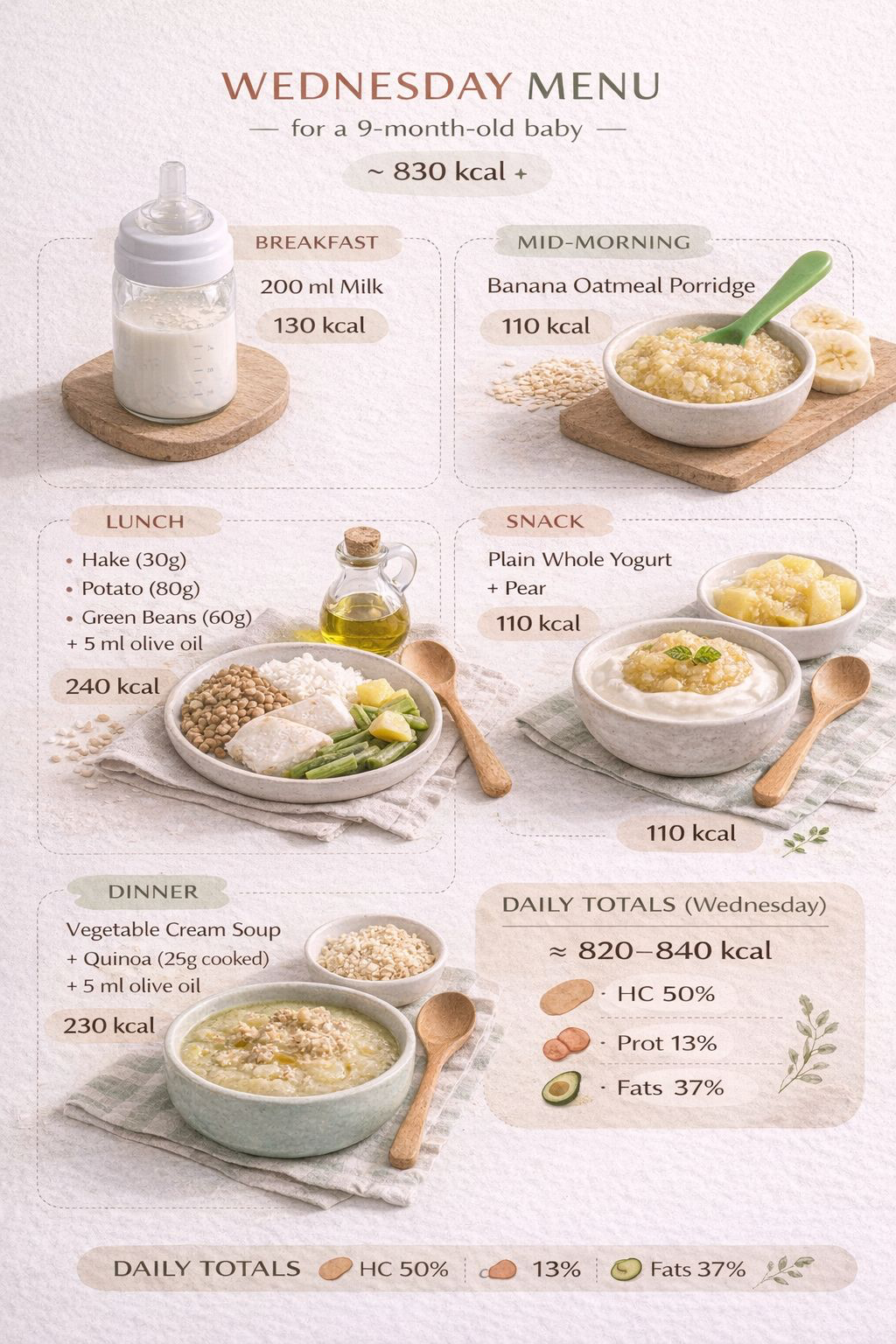
Wednesday (~830 kcal)
- Breakfast: 200 ml milk.
- Morning snack: banana + oats puree.
- Lunch: hake (30 g), potato, green beans, and olive oil.
- Snack: plain yogurt + pear.
- Dinner: vegetable cream + cooked quinoa + olive oil.
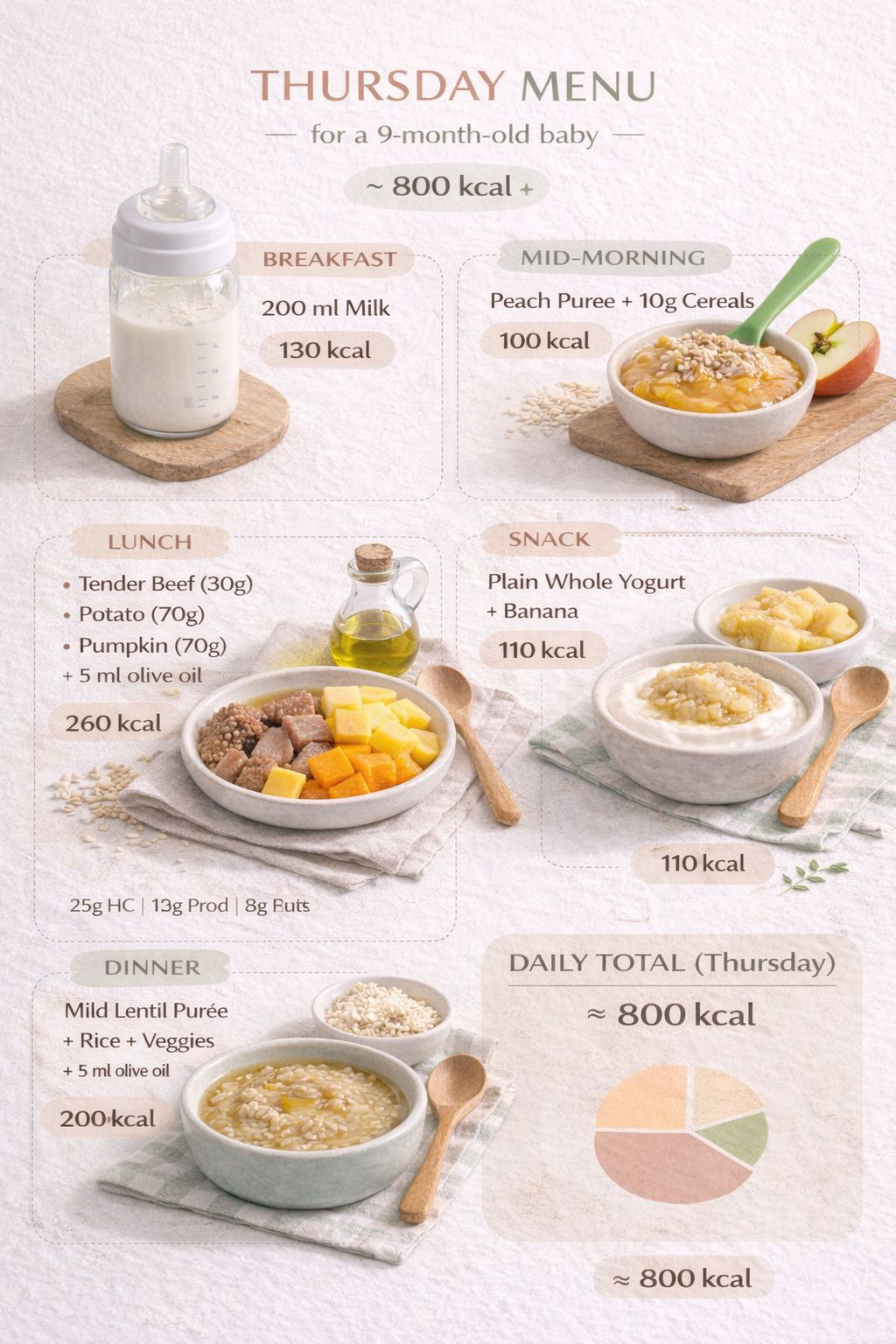
Thursday (~800 kcal)
- Breakfast: 200 ml milk.
- Morning snack: peach puree + cereals.
- Lunch: beef (30 g), potato, pumpkin, and olive oil.
- Snack: plain yogurt + banana.
- Dinner: soft lentil puree + rice + vegetables + olive oil.
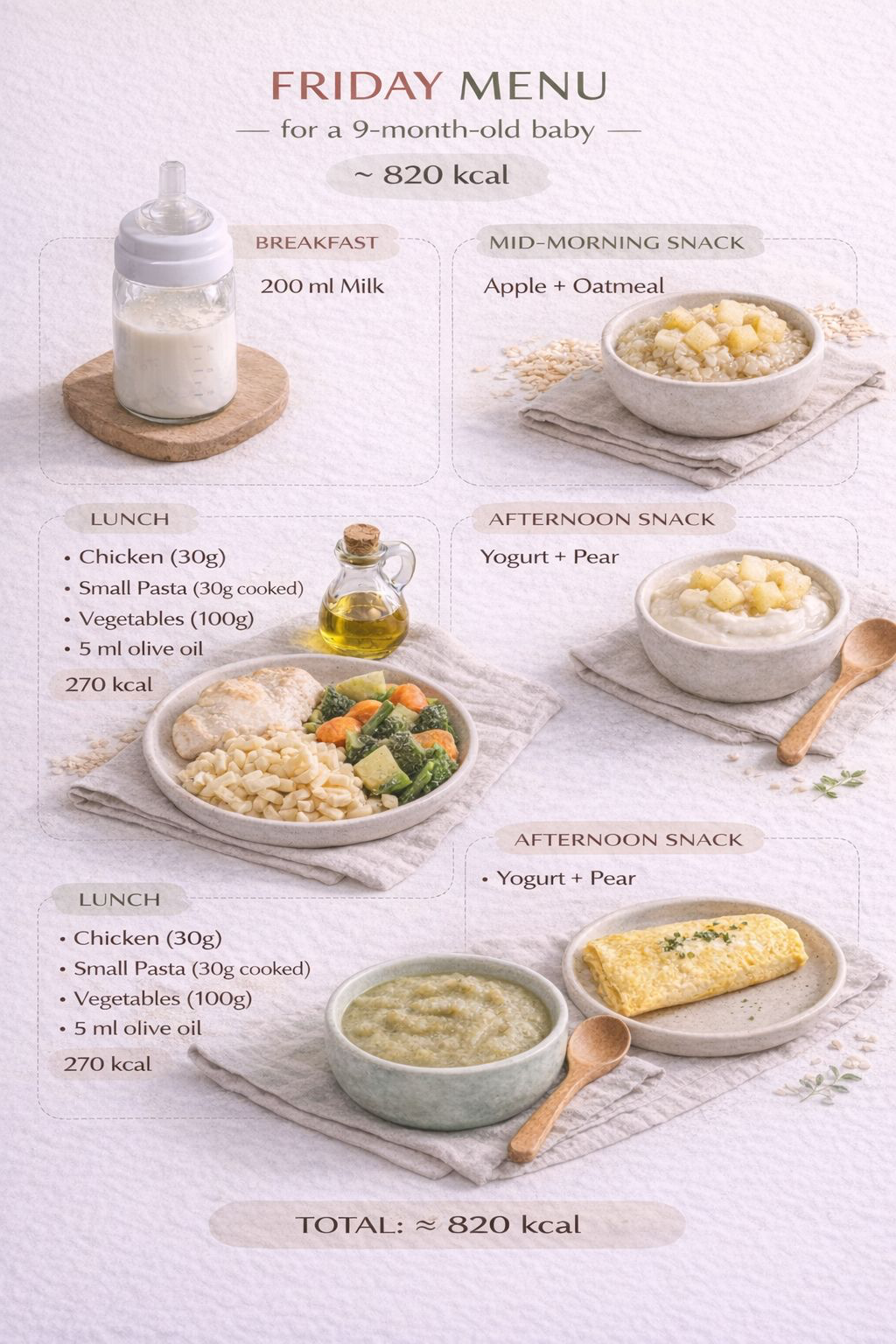
Friday (~820 kcal)
- Breakfast: 200 ml milk.
- Morning snack: apple + oats.
- Lunch: chicken (30 g), small pasta, vegetables, and olive oil.
- Snack: plain yogurt + pear.
- Dinner: French omelet + vegetable puree.
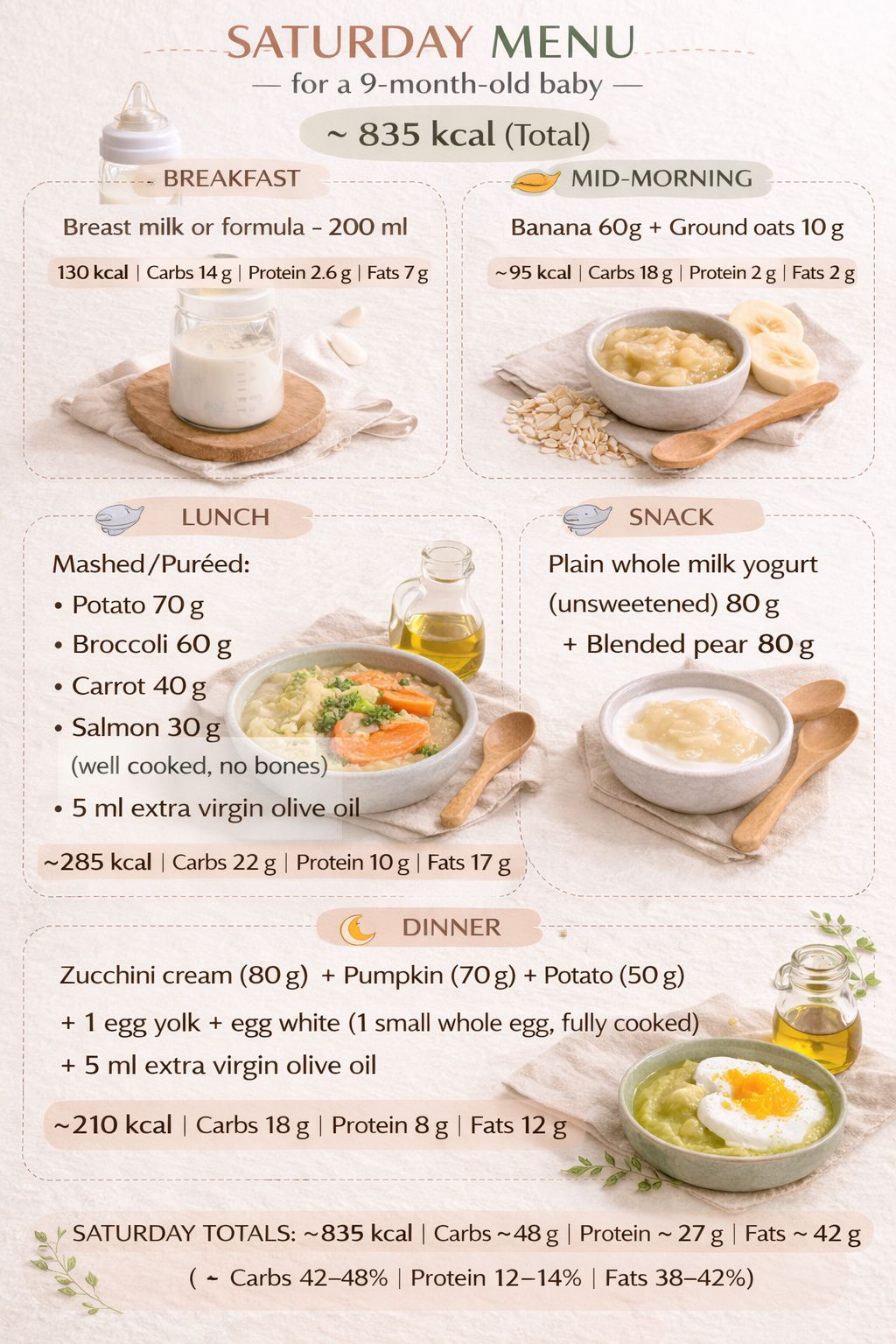
Saturday (~835 kcal)
- Breakfast: 200 ml milk.
- Morning snack: banana + ground oats.
- Lunch: salmon (30 g), potato, broccoli, carrot, and olive oil.
- Snack: plain whole yogurt + pear.
- Dinner: zucchini/pumpkin/potato cream + cooked whole egg + olive oil.
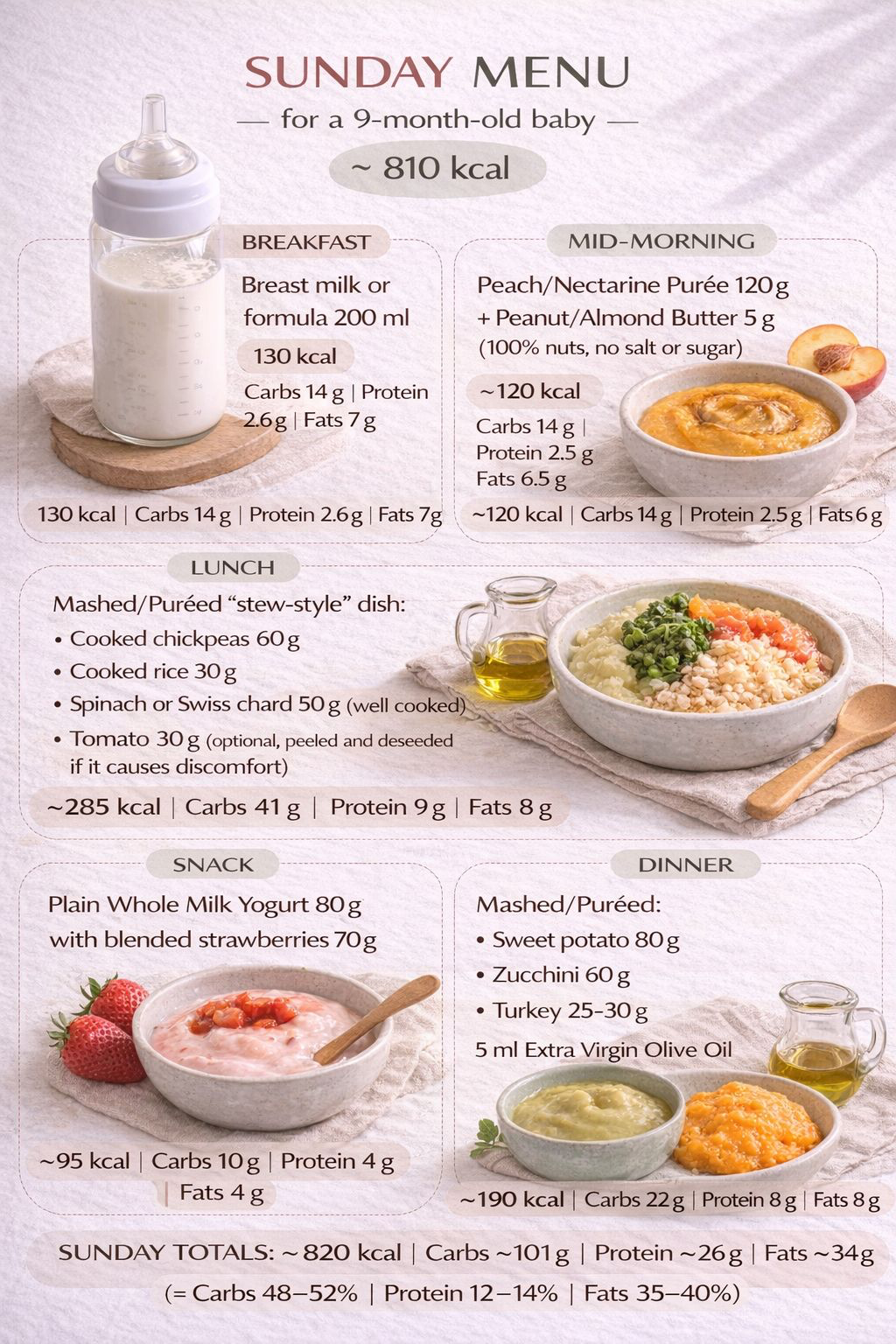
Sunday (~820 kcal)
- Breakfast: 200 ml milk.
- Morning snack: peach or nectarine puree + peanut/almond butter.
- Lunch: mashed chickpea stew with rice, spinach/chard, tomato (optional), and olive oil.
- Snack: plain yogurt + strawberries (or kiwi).
- Dinner: sweet potato + zucchini + turkey puree with olive oil.
Weekly menu overview for a 9-month-old baby
| Day | Core menu | Approx. kcal |
|---|---|---|
| Monday | Milk, pear + oats, potato/carrot/zucchini + chicken + olive oil, yogurt + banana, cereal porridge | ~820 |
| Tuesday | Milk, cooked apple + almond butter, lentils + rice + vegetables + olive oil, yogurt + mango, egg omelet + vegetable puree | ~790 |
| Wednesday | Milk, banana + oats, hake + potato + green beans + olive oil, yogurt + pear, vegetable cream + quinoa | ~830 |
| Thursday | Milk, peach + cereals, beef + potato + pumpkin + olive oil, yogurt + banana, soft lentil puree + rice | ~800 |
| Friday | Milk, apple + oats, chicken + small pasta + vegetables + olive oil, yogurt + pear, omelet + vegetable puree | ~820 |
| Saturday | Milk, banana + oats, salmon + potato + broccoli + carrot + olive oil, yogurt + pear, vegetable cream + egg | ~835 |
| Sunday | Milk, peach + nut butter, chickpeas + rice + greens + olive oil, yogurt + strawberries, sweet potato + zucchini + turkey | ~820 |
Weekly nutritional average
- Average daily energy: ~816 kcal.
- Carbohydrates: around 48-51%.
- Protein: around 13-14%.
- Fat: around 35-39%.
Safety notes for complementary feeding
- Avoid honey, added sugar, and added salt in the first year.
- Always supervise meals and avoid high choking-risk shapes.
- Introduce allergens one by one in safe forms and watch for reactions.
- If your baby was preterm, has growth concerns, or feeding difficulties, personalize the plan with your pediatrician.
Use this menu with growth and feeding tracking
To make this plan actionable, pair it with a simple tracker for meals, symptoms, sleep, and growth trends. You can use the WHO baby growth percentile calculator and our baby solids guide to adapt week by week.
Once your child reaches 12 months, move from a sample menu to a generator with more weekly variety. Our weekly meal planner for babies and kids 12-23 months creates a fresh 7-day menu with age-based milk targets, calorie checks, and repetition limits.
Track meals, sleep, and growth in one place with Raffy and make your weekly menu easier to adjust.
