
My Baby's First Vaccine: What I Felt and What I Learned
I never thought something as small as a syringe could make me hesitate so much.
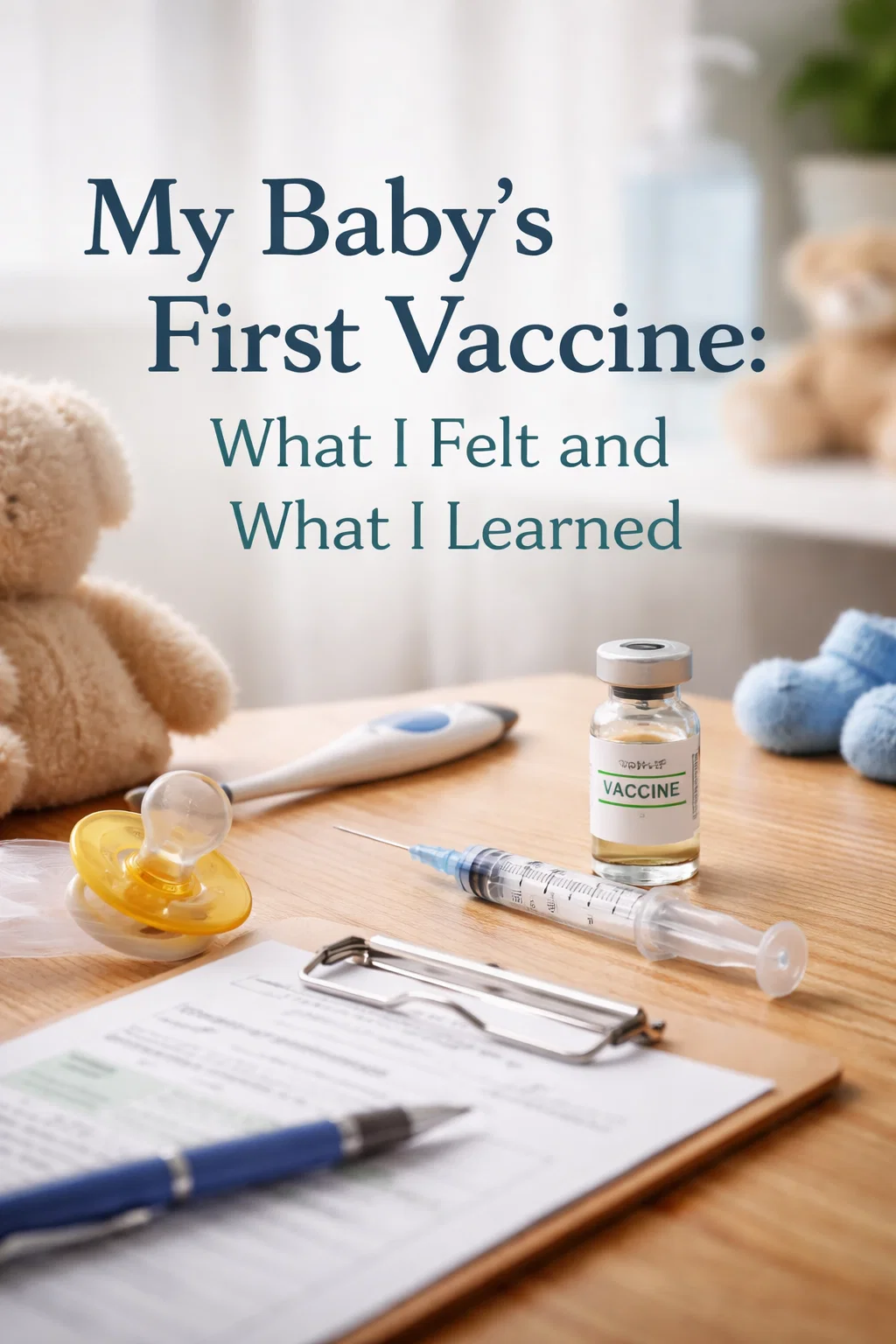
By Gurru Labs
December 2025
I remember perfectly the first time I took my baby for vaccines. So tiny. Only a few weeks old. I kept looking at my baby in the waiting room and thinking: "Is this really necessary so soon?" "What if something happens?"
No one talks about the knot in your stomach when you know your baby will cry and you still say yes. But no one talks enough about how calm you feel when you go back home afterward.
Protecting also means making difficult decisions
When you become a parent, you learn something quickly: protecting your child does not always mean preventing tears. Sometimes it means allowing a small discomfort today to avoid something much bigger tomorrow.
Vaccines work like training for the immune system. Your baby's body learns to recognize viruses and bacteria without having to suffer the real disease. It's like a fire drill: there is no real fire, but the body learns what to do if there is one someday.
That changes the perspective.
What helped me decide
It helped me understand that many diseases we barely see today did not disappear by chance. Polio did not stop paralyzing children for no reason. Meningitis did not suddenly become harmless.
They became less common in daily life because families vaccinated for years. I also understood something important: not seeing a disease does not mean it no longer exists. It means prevention is working.
The injection moment
I won't lie. They cry. And something breaks inside you. But the crying lasts seconds. The hug lasts longer. The protection lasts for years.
Afterward, there may be mild fever, irritability, or redness where the shot was given. These reactions are common and usually mild. It helped me to know that this can be a sign the immune system is doing its job.
Serious adverse effects are extremely rare. Vaccines go through strict controls before approval and while in use. National schedules are reviewed by public health authorities and scientific pediatric societies. This is not improvised and not based on trends.
That gave me peace.
It's not only for your child
There was one idea that deeply moved me once I understood it: vaccinating does not protect only your baby. It also protects newborns who are still too young for certain vaccines, children with weakened immunity, and people who cannot receive specific vaccines for medical reasons.
It is an individual decision with collective impact. And that is powerful.
Doubts are normal
We live in a time of constant information: opinions, videos, personal stories. Some are well-intentioned. Some are not.
I also had doubts. The best thing I did was talk about them with my pediatrician. Ask openly. Listen to evidence-based answers. When information comes from official sources and healthcare professionals, decisions become clearer.
It's not about never questioning. It's about questioning well.
How I feel now
Looking back, I do not remember exactly how many doses my baby had at six months. I do not remember the exact day there was fever.
But I do remember the relief of knowing my baby was protected against diseases that, not long ago, changed lives forever.
Vaccinating is not an automatic act. It is a conscious one. It means thinking beyond the uncomfortable moment. It means choosing prevention. It means choosing the future.
If you are reading this before your baby's first vaccine, here is what I wish someone had told me: it's normal that it hurts you more than it hurts your baby. It's normal to doubt. And it's also normal to feel afterward that you did the right thing.
Because protecting is also loving for the long term.
First vaccine day can feel intense. Reliable information makes the whole experience calmer.
