On this page · 9 sections
In short
At 10 months, most babies have 3 meals and 1-2 snacks a day on top of their milk feeds, around 650-800 kcal in total, with breast milk or formula still giving about half of that. This 7-day menu averages ~720 kcal/day.
- Meals a day
- 3 + 1-2meals + snacks, plus milk
- Energy
- 650-800 kcalthis menu: ~720
- Milk
- 400-600 mlthis menu: 560 ml
- Texture
- Mashed to choppedplus soft finger foods
This guide is educational and based on general pediatric references (WHO, AAP, NHS, EFSA). Every baby is different, so adjust portions and textures with your pediatric team.
Nutritional foundations at 10 months
- Estimated daily energy: around 650-800 kcal/day. WHO estimates average total needs of about 686 kcal/day at 9-11 months, with complementary foods covering about 300 kcal of that for a breastfed baby. Individual needs vary with weight, sex and appetite (EFSA).
- Meals: WHO suggests 3-4 meals plus 1-2 snacks from 9 months on, alongside milk. This menu has 3 meals, 1-2 snacks and 4 milk feeds.
- Approximate macro distribution: in this menu, carbs 42-53%, fat 34-44%, protein 12-15% of energy. Single days vary; the week as a whole is what counts.
- Milk: breast milk or formula usually still covers around half of the energy: often about 400-600 ml/day, less as solid food grows. This menu counts 4 × 140 ml.
- Textures: soft mashed foods with lumps, finely chopped soft foods and soft finger foods your baby can pick up. Offer small sips of water from an open cup with meals.
- Iron: include an iron-rich food most days: meat, fish, egg, lentils, beans, chickpeas or tofu, with vitamin C-rich fruit or vegetables on the side.
- How the numbers work: figures use standard infant formula values (about 67 kcal per 100 ml); breast milk is similar, so the calorie totals hold either way; protein is a little lower with breast milk. Foods are plain, cooked and unsalted, measured in grams (ml for milk and olive oil), with values from USDA FoodData Central rounded to the nearest 5 kcal and whole grams. Treat them as estimates.
Daily meal details
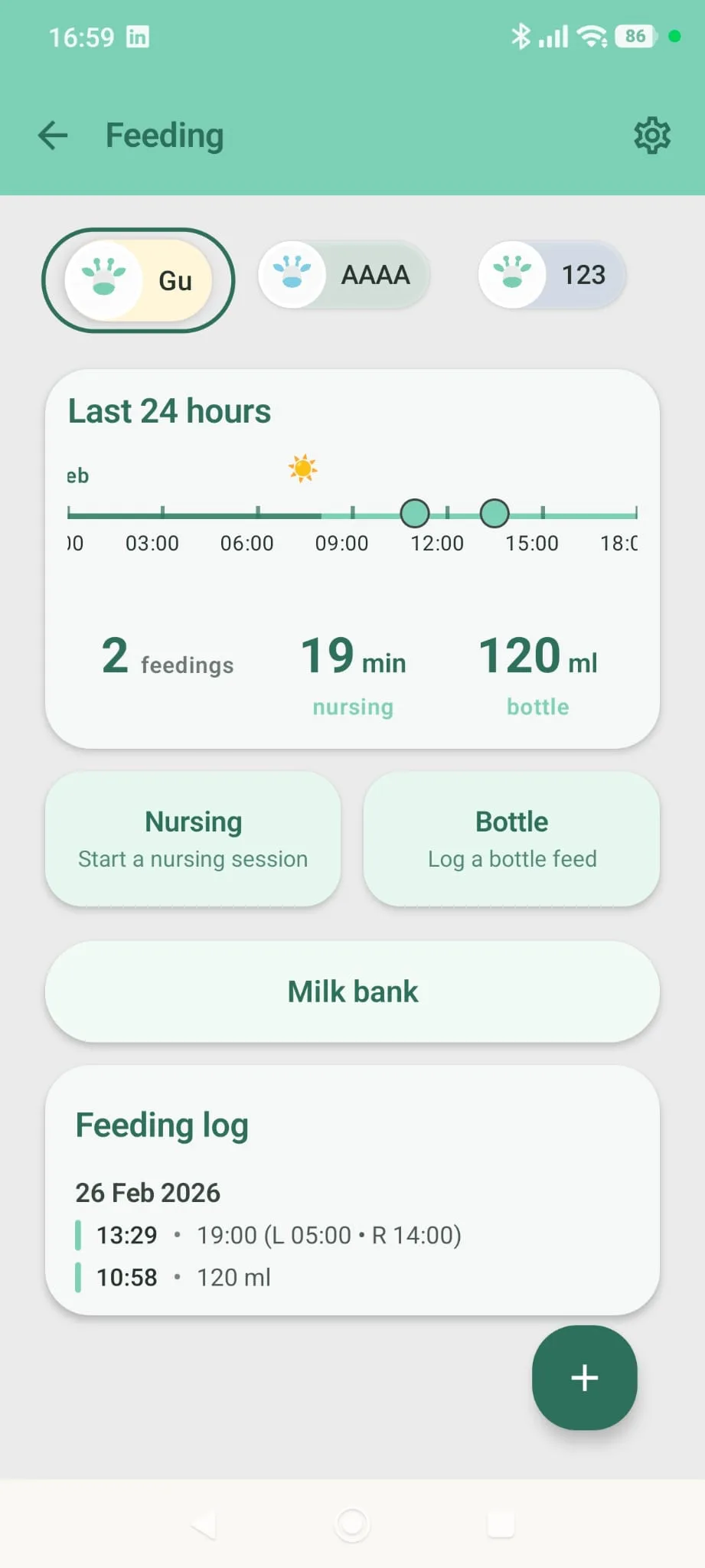
 Raffy · free on Android
Log what they eat and how it agrees with them
Record every meal, any reaction, and sleep in Raffy's diary. When you introduce a new food, you will have it noted in the app.
From 10 to 11 months: what changes
This menu works well for most of the month. Here is what usually changes as your baby gets closer to 11 months:
- 1Textures: from mashed foods with soft lumps to chopped soft pieces and more finger foods.
- 2Self-feeding: more practice with the spoon and the cup. Messy meals are normal and part of learning.
- 3Milk: milk feeds often shrink a little as meals get bigger, but they stay an important part of the day.
- 4Portions: they follow your baby's appetite; the energy ranges in this guide remain approximate.
Next up is the 11-month menu; you can also look back at the 9-month menu. From 12 months on, try the weekly meal planner for 12-23 months.
Weekly menu overview for a 10-month-old baby
| Day | Core menu | Approx. kcal |
|---|---|---|
| Monday | Oat porridge, banana and yogurt; lentils, carrot and rice with olive oil; pear; cod, potato and peas | ~700 |
| Tuesday | Scrambled egg and toast fingers; chicken, soft pasta and broccoli; yogurt with blueberries; sweet potato and black beans | ~755 |
| Wednesday | Yogurt with mango and oats; salmon, quinoa and zucchini; cooked apple; chickpeas, carrot and couscous | ~705 |
| Thursday | Banana-oat pancake fingers; beef, potato and pumpkin; peach; white beans, rice and zucchini | ~740 |
| Friday | Oat porridge with strawberries and peanut butter; chicken, sweet potato and green beans; yogurt and pear; tofu, rice and broccoli | ~705 |
| Saturday | Yogurt with kiwi and toast; vegetable frittata; avocado toast; cod with couscous and tomato | ~720 |
| Sunday | Oats with apple; chickpeas, zucchini and potato; yogurt with peach; chicken, cauliflower and pasta | ~720 |
Weekly nutritional average
- Average daily energy: ~720 kcal.
- Carbohydrates: around 42-53%.
- Protein: around 12-15%.
- Fat: around 34-44%.
Safety notes for complementary feeding
Pediatric safety
- Sit your baby upright and stay with them while they eat. Offer soft finger foods, and cut grapes and cherry tomatoes into quarters and halve or squash blueberries. Avoid whole nuts (NHS: not under 5), popcorn and hard raw pieces of apple or carrot.
- Avoid honey until after the first birthday, and add no salt or sugar to your baby's food. Choose lower-salt bread and cheese and use them in small amounts.
- This menu includes egg and a little peanut butter in well-cooked or thinned forms. Introduce one new allergen at a time, early in the day, and watch for reactions. If your baby has eczema or a known food allergy, ask your pediatrician first.
- Choose low-mercury fish such as salmon and cod, and check for bones. Avoid shark, swordfish and marlin (NHS), as well as other high-mercury fish such as king mackerel and tilefish.
- Cow's milk is fine in cooking and as plain yogurt, but not as the main drink before 12 months.
- Talk to your pediatrician if your baby coughs or gags a lot, refuses most foods, has poor weight gain, vomits often or shows signs of dehydration. If your baby was born preterm, personalize the plan with your pediatric team. Hives, swelling or breathing trouble after a food need urgent care.
Frequently asked questions
How many meals a day does a 10-month-old baby eat?
Most 10-month-olds have 3 meals and 1-2 snacks a day, plus about 4 milk feeds. In total that is usually around 650-800 kcal a day, depending on weight and appetite. WHO suggests 3-4 meals plus 1-2 snacks from 9 months.
How much milk does a 10-month-old baby need?
Many 10-month-olds drink about 400-600 ml/day of breast milk or formula, often less as they eat more solid food. Breastfed babies keep feeding on demand. Check your baby's needs with your pediatrician.
How much should a 10-month-old eat at a meal?
There is no single right amount. The portions in this menu (for example 20-55 g of vegetables or starch and 20-40 g of fish, meat or beans) are examples. Offer a little, let your baby decide how much to eat, and expect big differences from day to day.
Can I use this 10-month menu for baby-led weaning?
Yes. Offer the same foods as soft, finger-size sticks or strips, or as mashed textures on a spoon, depending on your baby's skills. Always supervise meals and sit your baby upright.
Can a 10-month-old eat family food?
Often yes, if you set aside their portion before adding salt, sugar or sauces, and chop or mash it to a soft texture. Avoid honey and whole nuts, and keep cow's milk for cooking and yogurt until 12 months.
What changes at 11 months?
Meals move toward chopped soft family food and more finger foods, and milk feeds shrink a little. See the 11-month weekly menu for the next step.
Use this menu with growth and feeding tracking
To make this menu work day to day, log what your baby eats and how they take it: you will see what they accept, what they refuse, and whether anything doesn't agree with them. You can do that in Raffy, free on Android. For growth, use the WHO baby growth percentile calculator, and for getting started with solids, our baby solids guide.
Once your baby reaches 12 months, a sample menu is no longer enough, and more weekly variety helps. Try our weekly meal planner for babies and kids 12-23 months: a fresh 7-day menu with milk and calorie checks and limits on repeated meals.
Sources
- World Health OrganizationInfant and young child feeding
- World Health OrganizationGuiding principles for complementary feeding of the breastfed child
- EFSADietary Reference Values for energy
- U.S. Department of AgricultureFoodData Central (nutrient values for the foods in this menu)
- American Academy of Pediatrics · HealthyChildren.orgWhen Can Babies Start Solid Foods? Readiness & Feeding Tips
- NHS (UK)Your baby's first solid foods
- NHS (UK)Foods to avoid giving babies and young children
We checked this article against these sources on Oct 28, 2026. It is educational, not medical advice. Editorial policy
