On this page · 9 sections
In short
At 6 months, breast milk or formula is still the main food. Most babies start with 1 small meal of solids a day and build up to 2 over the month, for around 550-700 kcal in total. This 7-day menu (the 2-meal stage) averages ~626 kcal/day.
- Meals a day
- 1-2small solid meals + milk
- Energy
- 550-700 kcalthis menu: ~626
- Milk
- 700-900 mlbreast milk or formula, on demand
- Texture
- Smooth pureesor soft finger-size sticks (BLW)
This guide is educational and based on general pediatric references (WHO, AAP, NHS). Every baby is different, so adjust portions and textures with your pediatric team.
Nutritional foundations at 6 months
- Estimated daily energy: around 550-700 kcal/day, most of it from milk. WHO puts average needs at about 615 kcal/day for ages 6-8 months, but individual babies vary with size and appetite.
- Approximate macro distribution in this menu: carbs 42-50%, fat 41-47%, protein 9-11% of energy. Fat is high because milk is still the main food; the carb share grows as solids take over.
- Milk: breast milk or formula stays the main food, typically about 700-900 ml/day on demand. This menu uses 750 ml. Figures use standard infant formula values (about 67 kcal per 100 ml); breast milk is similar.
- Meals and portions: start with one small meal a day and add a second as your baby gets used to it. Portions begin at a few teaspoons and build up toward about half a 250 ml cup per meal (WHO); the amounts in this menu are for the end of the month. If your baby is just starting, use only the lunch from any day and keep milk feeds as usual.
- Readiness: most babies are ready around 6 months: they sit with support, hold their head steady, and show interest in food. Check with your pediatrician if you are unsure.
- Textures: smooth purees and soft mashes, or soft finger-size sticks if you follow baby-led weaning (BLW). Offer sips of water in an open cup with meals.
- Iron: iron needs rise around 6 months, so most days include an iron-rich food: meat, fish, egg, lentils or beans (iron-fortified infant cereal is another option).
- Allergens: common allergens can be offered early, one at a time and in age-appropriate forms. This menu has cod on Wednesday, egg on Friday and peanut butter on Sunday; skip any your baby has already tried.
- Amounts: food weights are cooked, ready-to-eat amounts, estimated from USDA FoodData Central values with no added salt or sugar. Your portions will differ.
Daily meal details
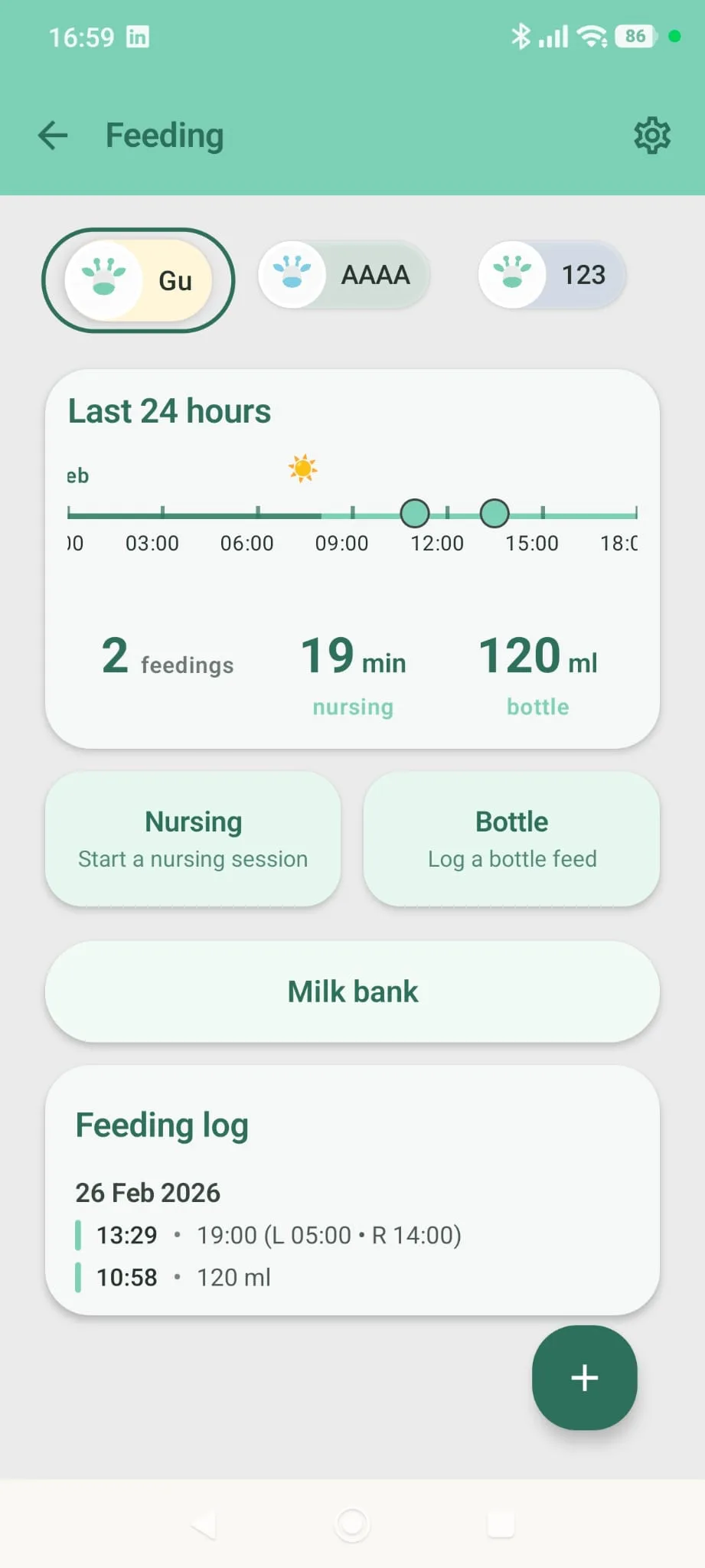
 Raffy · free on Android
Log what they eat and how it agrees with them
Record every meal, any reaction, and sleep in Raffy's diary. When you introduce a new food, you will have it noted in the app.
From 6 to 7 months: what changes
Over the next weeks, feeding usually evolves in these ways:
- 1Meals: from one small meal to two, and then toward 2-3 meals a day by 7-8 months.
- 2Textures: from smooth purees to thicker mashes with soft lumps, plus soft finger foods.
- 3Portions: from teaspoons to around half a cup per meal; milk is still the main food.
- 4Variety: more vegetables, fruit, iron-rich foods and allergens, one new food at a time.
When your baby is comfortable with two meals a day, move on to the 7-month weekly menu. To plan ahead for the first birthday, see the weekly meal planner for 12-23 months.
Weekly menu overview for a 6-month-old baby
| Day | Core menu | Approx. kcal |
|---|---|---|
| Monday | Milk, sweet potato + lentils, pear | ~630 |
| Tuesday | Milk, carrot + chicken, banana + infant cereal | ~630 |
| Wednesday | Milk, potato + zucchini + cod, avocado | ~625 |
| Thursday | Milk, pumpkin + beef, apple | ~600 |
| Friday | Milk, potato + peas + egg, peach | ~625 |
| Saturday | Milk, broccoli + sweet potato + salmon, mango | ~635 |
| Sunday | Milk, carrot + white beans, oats + peanut butter | ~635 |
Weekly nutritional average
- Average daily energy: ~626 kcal (daily totals range from 600 to 635 kcal).
- Carbohydrates: around 42-50%.
- Protein: around 9-11%.
- Fat: around 41-47%.
Safety notes for complementary feeding
Pediatric safety
- Always stay with your baby while they eat, seated upright. Gagging is common while learning and is different from choking; consider an infant first-aid class.
- For finger foods, offer soft cooked sticks that squash easily between your fingers. Avoid whole nuts, whole grapes, popcorn and hard raw pieces of apple or carrot.
- Avoid honey, added sugar and added salt in the first year, and do not give cow's milk as a drink before 12 months (it is fine in cooking).
- Offer new allergens one at a time, in small amounts and early in the day. If your baby has severe eczema or a known food allergy, ask your pediatrician before offering egg or peanut.
- Choose fish low in mercury, such as cod, hake or salmon, and avoid swordfish, shark, marlin, king mackerel and tilefish.
- Call your pediatrician if you see hives, swelling, repeated vomiting or breathing trouble after a food (call emergency services for trouble breathing), or if your baby refuses food, loses weight, or was born preterm.
Frequently asked questions
How much should a 6-month-old baby eat in a day?
Milk is still the main food. A baby this age typically has about 700-900 ml of breast milk or formula a day, plus one or two small meals of solids that start at a few teaspoons and grow toward about half a 250 ml cup per meal. In total that is usually around 550-700 kcal, but appetite changes from day to day.
How many meals a day for a 6-month-old baby?
Start with one small meal a day and add a second as your baby gets the hang of it, often within a few weeks. WHO suggests 2-3 meals a day plus milk at 6-8 months, so there is no rush to reach three.
How much milk does a 6-month-old need once they start solids?
Keep offering breast milk or formula on demand, typically about 700-900 ml a day. At this age solids add iron and new tastes but do not replace milk feeds yet. This menu uses 750 ml.
What is a sample menu for baby-led weaning at 6 months?
The same foods work for baby-led weaning: offer soft finger-size sticks (for example steamed sweet potato, ripe avocado or soft pear) instead of purees, and include an iron-rich food most days. Always supervise and keep your baby sitting upright.
What foods should a 6-month-old eat first?
There is no required order. Start with iron-rich foods such as meat, fish, egg, lentils or beans, plus vegetables and fruit. Offer common allergens like egg, peanut and fish one at a time in age-appropriate forms, unless your pediatrician has advised otherwise.
What menu should I follow after 6 months?
At 7 months, move on to thicker mashed textures and 2-3 meals a day with the 7-month menu. After the first birthday, use the weekly meal planner for 12-23 months for a fresh 7-day menu with milk and calorie checks.
Use this menu with growth and feeding tracking
To make this menu work day to day, log what your baby eats and how they take it: you will see which foods they accept, which they refuse, and any reaction when you introduce a new allergen. You can do that in Raffy, free on Android. For growth, use the WHO baby growth percentile calculator, and for getting started with solids, our baby solids guide.
Once your baby reaches 12 months, a sample menu is no longer enough, and more weekly variety helps. Try our weekly meal planner for babies and kids 12-23 months: a fresh 7-day menu with milk and calorie checks and limits on repeated meals.
Sources
- World Health OrganizationInfant and young child feeding
- American Academy of Pediatrics · HealthyChildren.orgWhen Can Babies Start Solid Foods? Readiness & Feeding Tips
- American Academy of Pediatrics · HealthyChildren.orgAmount and Schedule of Baby Formula Feedings
- NHS (UK)Your baby's first solid foods
- NHS (UK)Foods to avoid giving babies and young children
- World Health OrganizationGuiding principles for complementary feeding of the breastfed child
- World Health OrganizationWHO guideline for complementary feeding of infants and young children 6-23 months of age
- U.S. Department of AgricultureFoodData Central (nutrient values used for the calories and macros)
We checked this article against these sources on Oct 28, 2026. It is educational, not medical advice. Editorial policy
